
Lucidity Ledger — Insights for the Learned Investor

October 26, 2026
The start of Fall is one of my favorite times of year. A hot cup of coffee on a chilly morning, a cozy seat by the fireplace, and football on the weekends. It's also October, and even though Halloween is right around the corner, the latest headlines are doing more to raise the hair on the back of my neck than any haunted house could.
There's a lot of uncertainty lately, and rather than pretend otherwise, let's name what's going on, put it in context, and walk through what we're doing about it.
First, what’s the good news?
It’s not all ghouls and goblins. The economy and markets have bright spots to focus on, which helps us keep everything in perspective.
Markets have had a strong year. Through the end of the third quarter, most major stock indexes are up for the year. Beyond the focus on AI (as reflected in the S&P 500’s performance), what stands out is that this year’s returns haven’t been limited to big tech. Small companies, emerging markets, and energy have all kept pace with or beaten the S&P 500. Market leadership rotates, often without much warning, and a diversified portfolio is built to participate wherever it shows up.[i]

Corporate earnings are strong. Earnings per share continue to grow at an above-average pace. Healthy profits are ultimately what support stock prices over time.
Bonds pay more today. Bond prices and interest rates move in opposite directions, so rising rates have hurt bond prices this year: the broad U.S. bond market is down -2.9%. The silver lining is that investment-grade bonds now yield about 5.6%, up from 4.3% in January. Higher starting yields result in more income in the future – as older bonds mature, the cash is reinvested into bonds with higher rates.[ii]
Unemployment remains low. At 4.2%, the unemployment rate is still historically low. Job postings are trending upward, with engineering occupations (mechanical, civil, and electrical) being in the top hiring sectors, along with sustained demand for doctors, surgeons, and therapists.[iii]
What's scary right now?
Beyond creepy Halloween movies and eating too much candy, there are some major issues keeping us up at night.
BIG government debt, and more bonds than buyers want. This isn't only a U.S. problem. Government debt is at or near record highs across major economies, and higher defense spending worldwide is adding to the strain. In the U.S., interest payments on the national debt reached $1.05 trillion in fiscal 2026, up 8% from the year before. All that government borrowing, plus companies borrowing heavily to build out AI, means a flood of new bonds competing for the same pool of investor savings. Meanwhile, central banks and pension funds have pulled back on buying long-term debt.[iv]
Interest rates remain elevated. The Federal Reserve raised its benchmark rate in September, now ranging from 3.75% to 4.00%, and markets expect another increase before year-end. Good for savers, but bad for borrowers; now is a tough time to finance a car purchase or carry a credit card balance.
Inflation isn’t coming down. Consumer prices rose 3.7% as of September, and inflation has run above the Fed's 2% target for five straight years. Diesel is a big part of the story this year – the national average hit a record $6.52 a gallon on September 22, up nearly 80% from a year earlier. Diesel powers the trucks, farm equipment, and construction machinery behind almost everything we buy, so those costs tend to ripple into prices well beyond the gas pump.
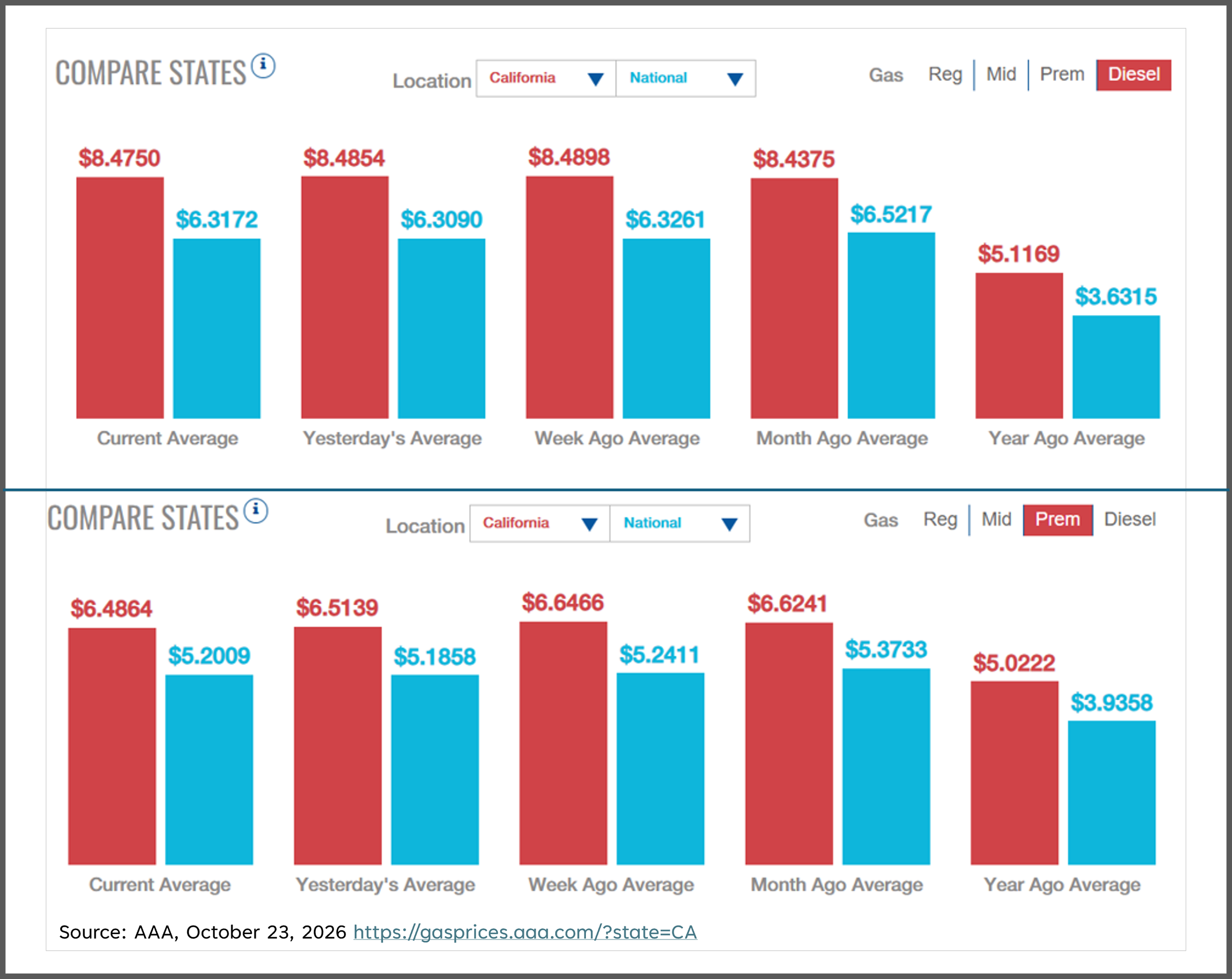
A frozen real estate market. Higher borrowing costs have kept many buyers on the sidelines and many owners staying put. The result is residential gridlock.
A stock market leaning heavily on one industry. If you own an S&P 500 index fund, you might assume you're broadly diversified. In reality, a handful of the largest companies make up a large share of the index, and many are riding the same tech and AI wave.
Growing pushback against AI. According to a Gallup survey earlier this year, seventy-one percent of Americans oppose building an AI data center in their area. Local opposition blocked or delayed 75 data center projects, worth about $130 billion, in the first three months of 2026 alone, roughly as many as in all of 2025. With so much of the market's gains tied to the AI build-out, that resistance is a risk worth watching.[v]
Political unrest at home and abroad. The two are more intertwined than ever. Our near-term inflation outlook largely depends on events tied to the Middle East conflict, while at home the upcoming mid-term elections are gearing up to be volatile and contentious (an understatement, we know).
The possible disclosure of UAPs (formerly known as UFOs). Yes, really, if you follow that rabbit hole (or caught Steven Spielberg’s Disclosure Day this summer).[vi]
Spooky season indeed.
What is Lucidity doing for clients’ portfolios?
Uncertainty isn't new, and our approach at Lucidity doesn't change with the headlines. Keep reading to learn what we're focused on as we head into into year-end.
Staying diversified. We continue to hold positions in sectors and other diversified areas of the market to offset the S&P 500's heavy concentration in AI-related companies. Because stocks and bonds don't always move in opposite directions (in a rising-rate environment like this, they can fall at the same time), diversifiers earn their keep. Our long-term energy position is a good example. As noted above, energy is up 40.3% this year, including 17.2% in the third quarter alone.
Keeping bonds short- and intermediate-term. It remains to be seen whether the Fed holds rates steady or raises them again before year-end. Markets expect another rate hike in 2026, likely in December. Longer-term bonds are more sensitive to rate changes and are more volatile in a rising-rate environment. Owning shorter maturities reduces that interest rate risk while still capturing today's higher yields.
Rebalancing to target. When one part of a portfolio outperforms, it grows into a larger share than intended. Rebalancing trims what has grown and adds to what has lagged, bringing each portfolio back to its target allocation. This process lets us take profits from asset classes that have outperformed their peers and buy more of those that are currently on sale. We’ll continue to rebalance as opportunities arise.
Tax-loss harvesting in taxable accounts. As we approach year-end, we continue to look for holdings worth less today than what we paid (e.g., municipal bonds, where this year's rising rates have pushed prices down). Selling those positions locks in a loss we can use to offset gains from rebalancing stocks (now or in the future), helping keep your tax bill in check. We then reinvest the proceeds from tax-loss harvesting into similar holdings so your portfolio stays fully invested and on target.
Managing cash flow efficiently. For clients drawing from their portfolios, we pay close attention to the source of each withdrawal, so you get the cash you need without creating unnecessary taxes.
Before the year wraps up…
Fall also brings several planning deadlines, making it one of the most valuable times of year for us to work together. Over the next couple of months, we'll be helping clients with:
Required minimum distributions, making sure any RMDs from IRAs and inherited accounts are taken by December 31.
Charitable giving, whether that's donating appreciated stock, funding a donor-advised fund, or making qualified charitable distributions directly from an IRA if you're 70½ or older.
Roth conversions, evaluating whether converting part of a traditional IRA makes sense this year, while your income and tax bracket are clear.
Retirement and benefits check-ins, topping off 401(k) contributions before your final paychecks of the year and reviewing open enrollment choices for next year.
Year-end planning for business owners, reviewing retirement plan contributions and estimated tax payments before December 31.
If anything in this post raises a question, or you'd like to get ahead of any of these year-end planning items, please reach out. In the meantime, enjoy the season, and leave the scary stuff to us.
(If you are reading this and do not currently have a plan, or would like a second opinion on one you do have, reach out to us and we'll help get you on the right path.)
[i] Index returns from Advyzon, Russell, MSCI, and J.P. Morgan.
[ii] J.P. Morgan Asset Management Guide to the Markets – U.S | 4Q 2026 As of September 30, 2026
[iii] Hiring Lab Economic Research by Indeed https://hiringlab.indeed.com/2026/10/22/us-labor-market-snapshot-october-2026/
[iv] Goldman Sachs https://www.goldmansachs.com/insights/goldman-sachs-exchanges/why-global-bond-yields-are-surging
[v] Gallup https://news.gallup.com/poll/709772/americans-oppose-data-centers-area.aspx
Brookings https://www.brookings.edu/articles/data-center-backlash-signals-a-fight-over-ai-power/
[vi] According to NASA, Unidentified Anomalous Phenomena (“UAP”) "are events in the sky that cannot be identified as aircraft or known natural phenomena from a scientific perspective." In February, President Trump directed federal agencies to declassify their UFO files. Since May, the Pentagon has posted batches of videos, photos, and witness reports on a public website. Nothing released so far confirms extraterrestrial life, though the government admits it can't explain everything in the files either. To date, seven tranches of records have been released for public viewing. https://www.war.gov/UFO/
This commentary is only general information and should not be construed as investment, tax, or legal advice. You should consult your own investment, tax, and legal advisors before engaging in any transaction. Past performance of any market results is no assurance of future performance. The information presented within has been obtained from sources believed to be reliable but is not guaranteed.
Do you have questions about applying these ideas to your unique situation or about anything else related to money, investments, or financial education? We are happy to help get you on track! Contact us for a complimentary, no-obligation conversation.